Do you want a deep, serene accord and harmony to gradually infuse into every single area of your life? Well, start meditating then. Yes! Billions of people meditate and more than a few successful individuals attribute a part of their achievement to meditation.
What is meditation?
You may perhaps consider meditation to be a devotion or prayer. But is it so? No.
Then what is meditation all about?
Meditation is not a practice but it is a way of life. Meditation means ‘a termination of your thought process’. In all conscience, meditation means consciousness, when your mind becomes free of dispersed thoughts and numerous patterns. Whatsoever you do with consciousness is meditation. “Observing your breath” is a form of meditation; “hanging on to what birds sing” is meditation. As long as these undertakings are free from any interruption to the mind, it is meditation.
Benefits of meditation
So the next time you brush aside and shut down and let yourself thaw out, remind yourself of all the welfares of meditation.
-
- Better Immunity
Meditation seems to boost your immunity while reducing the risk of breast cancer.
- Better Immunity
-
- Emotional Balance
Meditation is surely the way to treat the neurotic behaviour and unhealthy emotional conditions.
- Emotional Balance
-
- Increased Fertility
Females are more probable to conceive through periods when they are relaxed rather than worried. Likewise, stress decreases sperm count as well as motility. As a result, meditation may perhaps boost male fertility as well.
- Increased Fertility
-
- Dismisses Irritable Bowel Syndrome
Performing a relaxation meditation two times every day may help you reduce the signs of bloating, diarrhoea as well as constipation.
- Dismisses Irritable Bowel Syndrome
-
- Drops Blood Pressure
Meditation may help you take your blood pressure down by making your body less reactive to stress hormones.
- Drops Blood Pressure
- Anti-Inflammatory
Meditation can help inhibit and cure symptoms associated with heart disease, asthma, arthritis, as well as skin disorders like psoriasis by turning out the stress response.
Types of meditation
To be precise, meditation can be classified into seven categories.
-
- Transcendental Meditation (TM)
The objective of Transcendental Meditation is to attain the state of enlightenment. It lets you experience that internal serenity, that discreet condition of least excitation, even when we are full of activity.
- Transcendental Meditation (TM)
-
- Heart Rhythm Meditation (HRM)
Heart Rhythm Meditation centres your energy on developing the application of awareness. This type of meditation focuses principally on the soul, with a stress on your breath. It is a triple-treat kind of meditation as it lets experience physical, emotional, and mystical benefits.
- Heart Rhythm Meditation (HRM)
-
- Kundalini
Kundalini emphasizes on the growing stream of energy. This type of meditation has its origins in both Buddhist as well as Hindu teachings. To experience this energy the person needs to focus on the breathing as it drifts over the energy centres in your body.
- Kundalini
-
- Guided Visualization
Guided visualization can be used for divine healing, stress release as well as personal development. By picturing calming and positive experiences, the body will react by discharging chemicals that produce feelings of positivity.
- Guided Visualization
-
- Qi Gong
Qi Gong may help you improve your posture, breathing, as well as the ability to unwind with ease. It is one of the most ancient types of meditation that originates from earliest Chinese society.
- Qi Gong
-
- Zazen
Zazen is the soul of Zen Buddhist practice and transforms to “seated meditation.” This technique is the easiest to take part in as it depends on self-guidance. Breathing is an indispensable component of Zazen and it lets the breath deepen and enrich the experience.
- Zazen
- Mindfulness
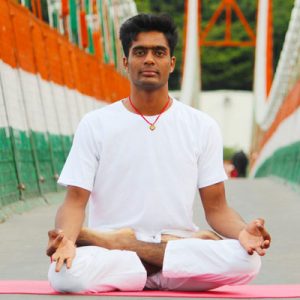
Mindfulness is all about recognizing the reality by allowing the mind to wander, accepting any feelings that turn up, as well as understanding the present. It is done by sitting with eyes closed, legs crossed, the back straight, while placing all attention on breathing in and out.
Meditation time and frequency
In general, 10 minutes a day, every single day of the week is far more helpful than 70 minutes on one day of the week. This approach would help you find the stability of consciousness in your day-to-day lives; rather than just secluded meditations practice that you perform and leave behind.
How to meditate?
Here are simple, yet pretty effective steps to attain a deeper meditation experience:
-
- Make a Sankalpa.
Sankalpa is a Sanskrit term that denotes the deepest desire, a sincere promise, an intention, or a resolution to do something. This word comes from the Sanskrit origins where “san” refers to “an association with the highest truth,” and kalpa refers to “promise.” Therefore, the Sankalpa signifies an affirming resolution to do something or attain something divine. Make a firm resolution ( Sankalpa ) that “I will meditate for next x number minutes”. By and by You will enjoy these moments of stillness and continue sit for longer time.
- Make a Sankalpa.
-
- Choose your mantra.
A mantra is a term or expression that you repeat to yourself without a sound all through the meditation. The objective of the mantra is to provide you something to put your thoughtfulness on other than your feelings and thoughts.
- Choose your mantra.
-
- Find a relaxed place to sit.
It’s best to find a relaxed place where you won’t be troubled. You don’t need to sit cross-legged on the ground except if that is comfortable for you. Instead, your goal should be to sit as erect as possible while still remaining relaxed.
- Find a relaxed place to sit.
-
- Close your eyes and take deep breaths.
Take some “cleansing breaths” by breathing in bit by bit through your nose and then letting your breath out of your mouth. Well along, carry on breathing at a usual speed through your nose with your lips closed softly. Mind will wander but try to refocus the mind and bring it back to the object of meditation. Get rid of the futile thoughts immediately but gently.
- Close your eyes and take deep breaths.
-
- Repeat your mantra without a sound without moving your tongue or lips.
Repeat your mantra gently and mildly. You must not force it. The repetition of mantra must be natural and effortless. At times, it is better to imagine that instead of resaying the mantra to yourself, you are listening to it as if it is being whispered in your ear.
- Repeat your mantra without a sound without moving your tongue or lips.
-
- Do not try to stop your thoughts.
It is human nature for the brain to wander and get lost in thoughts. Do not try to empty your mind or stop your thoughts. Every time you become conscious that your attention has wandered away from your mantra to your thoughts or any other disruptions, just return to repeating the mantra wordlessly.
- Do not try to stop your thoughts.
- End repeating the mantra.
After around 20 minutes, you can end repeating your mantra and carry on while sitting with your eyes closed. Make sure to spend some moments relaxing with your eyes closed before picking up where you left off.
So Practice Meditation to Become a Pro
“My mind never stops thinking. It flutters all over the place! I can’t meditate. I just can’t!” Sound familiar? Well, nail down that practice makes a person perfect. It’s an old saying we all know pretty well, right? Well, it works pretty well in the context of meditation as well. With this in mind, dredge up that great things have little beginnings. Your day-to-day pains are expected to yield more over the long-term that you would ever envision.


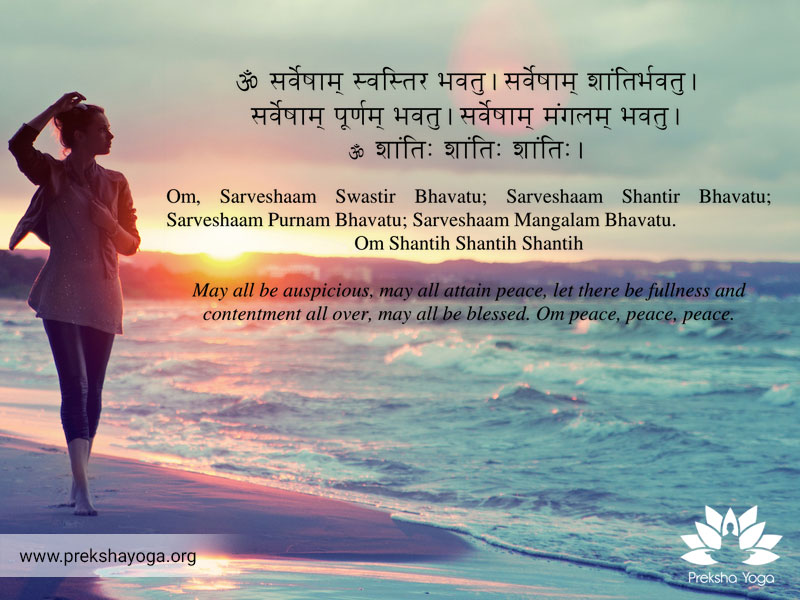


 Life is unpredictable, and the journey of life is all about letting go! Letting go of what you consider yourself to be, what you think you should be and what you need to attain!
You can’t prepare yourself for what lies ahead in your life, but you can embark on a journey that’s full of divine conquests and spiritual takeovers.
Yes! I’m talking about the mystical voyage of yoga.
People come to yoga training sessions for more than a few reasons. However, by and large, it’s for yoga gives them a bit more than a general ‘exercise’ class. Yoga teaches people to embrace change in life. As follows, a lot of people often practice yoga in the wake of some unfortunate, distressing episode of life. The story of Linda Cooper, a lady from Canada isn’t much different.
Yea! It may perhaps sound cliché, but Linda claims that attending training of Yin yoga at the Preksha Yoga Ashram has indeed changed her life. Linda Cooper, a student in Preksha Yoga Ashram, who went through an abusive and offensive relationship, shares her experiences with us. She describes how this mystic place made her feel calmer, more at peace, comfortable, and thoughtful. Here are the nuts and bolts of her painful yet gratifying journey that’s full of ebbs and flows.
Yin yoga practice may help you reclaim control over your life.
Linda shares how she left an abusive relationship by utilizing the support of yoga that helped her regain control over her life. While she was going through the phase of the emotional turmoil of the toxic relationship, Yoga helped her step out of the torment. The yogic kriyas, breathing practices and meditation offered her the sense of herself to trust the unknown as well as the impetus and courage to let go.
On her way to conquering sanctity and embrace Yoga, she reached Preksha Yoga Ashram out of the blue. Preksha Yoga Ashram is a place to be submerged in the purity, and adore the time to feel into the core networks of your existence. Linda states that the
Life is unpredictable, and the journey of life is all about letting go! Letting go of what you consider yourself to be, what you think you should be and what you need to attain!
You can’t prepare yourself for what lies ahead in your life, but you can embark on a journey that’s full of divine conquests and spiritual takeovers.
Yes! I’m talking about the mystical voyage of yoga.
People come to yoga training sessions for more than a few reasons. However, by and large, it’s for yoga gives them a bit more than a general ‘exercise’ class. Yoga teaches people to embrace change in life. As follows, a lot of people often practice yoga in the wake of some unfortunate, distressing episode of life. The story of Linda Cooper, a lady from Canada isn’t much different.
Yea! It may perhaps sound cliché, but Linda claims that attending training of Yin yoga at the Preksha Yoga Ashram has indeed changed her life. Linda Cooper, a student in Preksha Yoga Ashram, who went through an abusive and offensive relationship, shares her experiences with us. She describes how this mystic place made her feel calmer, more at peace, comfortable, and thoughtful. Here are the nuts and bolts of her painful yet gratifying journey that’s full of ebbs and flows.
Yin yoga practice may help you reclaim control over your life.
Linda shares how she left an abusive relationship by utilizing the support of yoga that helped her regain control over her life. While she was going through the phase of the emotional turmoil of the toxic relationship, Yoga helped her step out of the torment. The yogic kriyas, breathing practices and meditation offered her the sense of herself to trust the unknown as well as the impetus and courage to let go.
On her way to conquering sanctity and embrace Yoga, she reached Preksha Yoga Ashram out of the blue. Preksha Yoga Ashram is a place to be submerged in the purity, and adore the time to feel into the core networks of your existence. Linda states that the  Linda further articulates, “I could see and feel the difference in my mind, body, and spirit in the course of the Yin Yoga training. The benefits were remarkable. With constant practice, I got my life back under control.”
 Brilliant yoga teachers with proven experience
All through her training, Linda was directed and supported by a crew of yoga instructors with decades of experience in helping, leading, and healing. She learned from yoga instructors, therapists, and personal transformation experts with years of experience.
Brilliant yoga teachers with proven experience
All through her training, Linda was directed and supported by a crew of yoga instructors with decades of experience in helping, leading, and healing. She learned from yoga instructors, therapists, and personal transformation experts with years of experience.
 She compliments Yin Yoga training and claims, “Through the notable set of courses offered by Preksha Yoga Ashram, I could learn, rehearse and practice in a background that supported my complete potential.”
Yin yoga
She compliments Yin Yoga training and claims, “Through the notable set of courses offered by Preksha Yoga Ashram, I could learn, rehearse and practice in a background that supported my complete potential.”
Yin yoga  Linda states, “For the most part, it was an incredible experience I won’t ever trade for the world. At Preksha Yoga Ashram, I grew as an individual in every single way. When I made terms, I knew that it would offer me an opportunity to grow and absorb knowledge. But I had no idea that it would be such a supportive and reforming experience. It’s a place where I could let go emotionally and could feel at peace.”
Now, as her physical, spiritual, and mystical selves are working in sync, her life has turned out to be more stable and flexible – both materially and emotionally. She is sixty now and is willing to devote her life to yoga.
The Bottom Line
On the whole, yoga, like life, is an enduring ‘track,’ with indefinable twists and turns and peaks and valleys. So, if you approach the route of Yin Yoga training with an open, innocent, intrusive mind, you’ll always find something interesting to explore. As Linda voices, “Yoga is a path to reach divine in the self.”
Linda states, “For the most part, it was an incredible experience I won’t ever trade for the world. At Preksha Yoga Ashram, I grew as an individual in every single way. When I made terms, I knew that it would offer me an opportunity to grow and absorb knowledge. But I had no idea that it would be such a supportive and reforming experience. It’s a place where I could let go emotionally and could feel at peace.”
Now, as her physical, spiritual, and mystical selves are working in sync, her life has turned out to be more stable and flexible – both materially and emotionally. She is sixty now and is willing to devote her life to yoga.
The Bottom Line
On the whole, yoga, like life, is an enduring ‘track,’ with indefinable twists and turns and peaks and valleys. So, if you approach the route of Yin Yoga training with an open, innocent, intrusive mind, you’ll always find something interesting to explore. As Linda voices, “Yoga is a path to reach divine in the self.”